From interoperable digital-health systems to patient-specific anatomical models, VisMed-3D turns healthcare ideas into validated tools, devices, simulations, and training assets.
Performance and safety testing that reduces development cost, saves time, and increases the rate of product innovation.
Training & Education
Structured 3D printing, visualization, biodesign, clinical, and patient education for the next generation of innovators.
How we work
A human-centered path from idea to impact
People are at the heart of innovation. We bring clinical, technical, and business stakeholders into a practical process that makes complex healthcare tools intuitive, testable, and ready for real-world use.
01ImagineFrame the problem, users, constraints, and opportunity.
02VisualizeTranslate scans, data, workflows, or concepts into a shared model.
03CurateSelect the right materials, evidence, and technical approach.
04FabricatePrototype, simulate, test, and manufacture the solution.
05EducatePrepare clinicians, teams, and patients to use it confidently.
VisMed-3D portfolio
Selected work in medical visualization and fabrication
An archive of patient-specific models, surgical tools, research components, simulations, and additive-manufacturing experiments produced by VisMed-3D.
Showing 16 projects
Surgical planning
3D Craniotomy Model
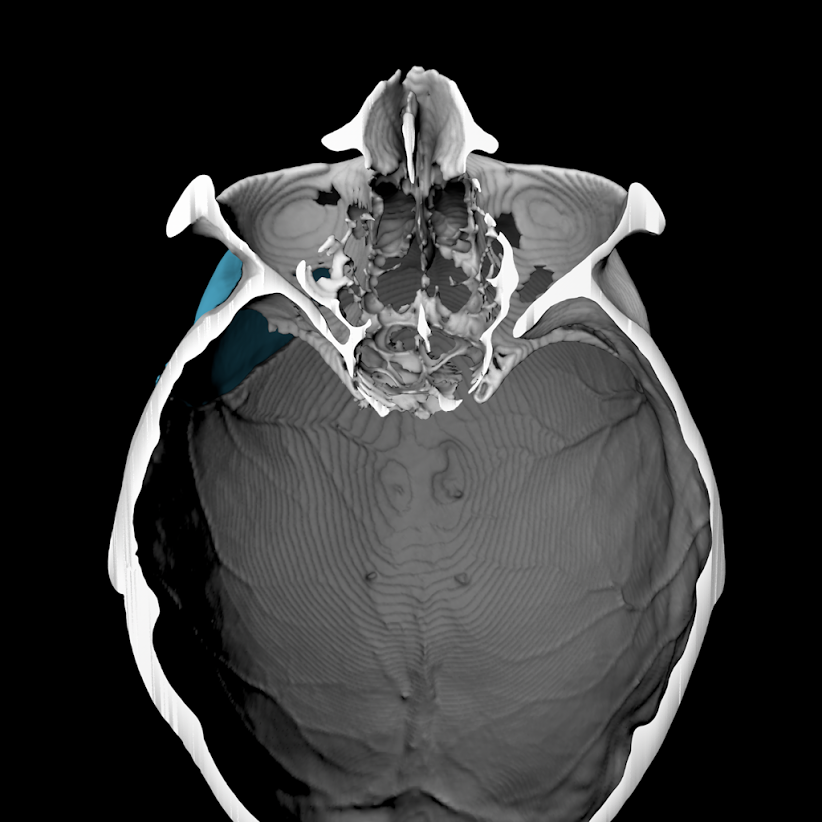
A 3D craniotomy model is printed and used to make an accurate replica of skull, which is then used to simulate surgery prior to going to the operating room. This allows neurosurgeons to practice and identify what needs to be done during the surgical procedure.
Scanning & modeling
3D Hand Scan
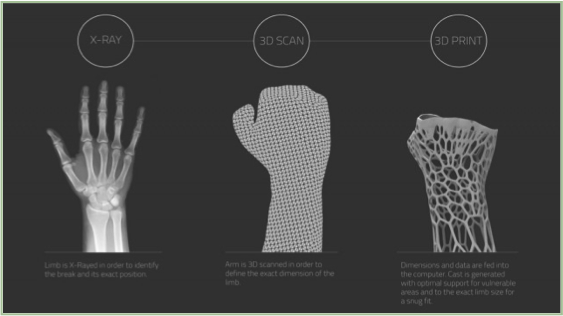
X-ray: the limb is X-rayed in order to identify the break and exact position. 3D scan: the arm is scanned to provide the exact dimensions of the limb. 3D print: dimensions and data are fed into the computer, and a cast is generated with optimal support for vulnerable areas and to the exact size for a snug fit.
Anatomical model
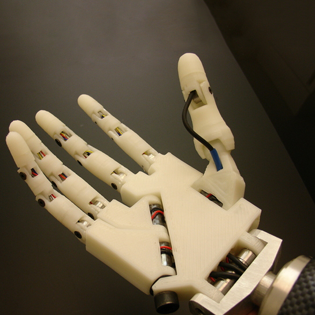
3D Printed Hand
Pre-surgical planning
3D Printed Mandible
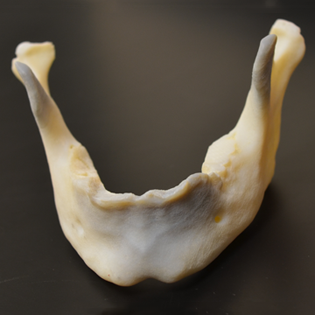
A pre-surgery preparation aid print of a patient-specific lower jaw that is accurately sized and contoured to allow the doctor to properly form the titanium reinforcement that will be screwed into the patient’s jaw. This support acts as a life-time structure for the jaw as a whole and specifically for the bone graft being concurrently performed. The advantage to this process is that it reduces the amount of time the patient has to be in the operating room by 20-30 minutes and allows the surgeon to do the physically hard labor of bending the titanium in advance instead of at a time just before complex microsurgery begins.
Anatomical model
3D Printed Fibula
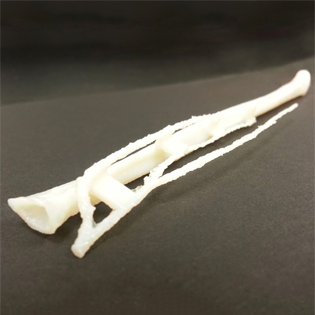
This 3D printed fibula is a true rendering of the fibula that is accurately sized and contoured, including vasculature to allow the doctor to prepare for the bone graft being performed. The key focus of this product is to help the doctor plan the surgery and identify potential issues related to the vasculature. The objective is that this will reduce overall operating time and improve outcomes by allowing for better planning before surgery.
Anatomical model
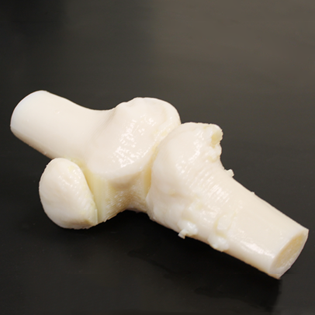
3D Printed Knee
To prepare for a complex procedure to correct a bone deformity in the knee that forces the patella out of alignment, VisMed-3D printed a patient-specific knee from a CT scan. The material used was printed in a hardness that approximates bone. The 3D printed knee allowed the surgeon to plan and practice the cut in advance of surgery.
Medical device
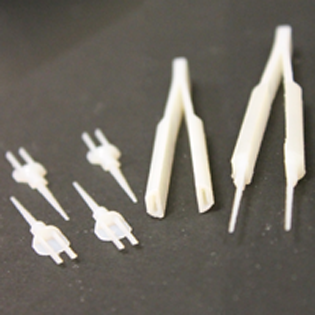
3D Printing for Surgical Devices
Custom designed tweezers that reduce waste, more comfortably fit a doctor’s hand, and can be used in multiple applications. With its universal base, the sharp tips can be replaced when damaged rather than having to replace the whole tool. The tips can also be exchanged out for different tips to suit the doctor’s changing needs.
Anatomical model
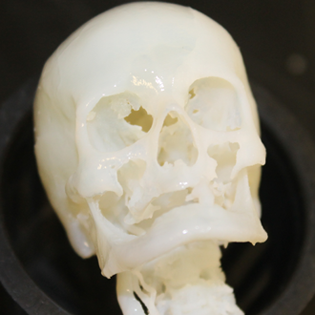
3D Skull
The full 3D skull is accurate to 16 µm, making it possible to identify even vascular patterns and nerve pathways. The accuracy at this resolution gives surgeons a better sense of what they face in surgery. The clear material makes it possible to see into sinus structures, giving a view not really possible with images presented in a 2D way.
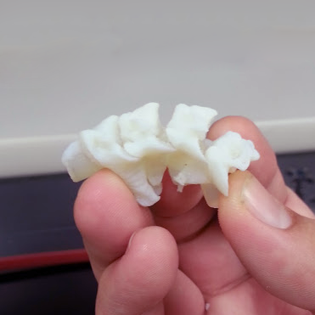
The 3D articulating, patient-specific spine was produced for a pedicle operation to insert 17 pedicle screws and connecting bars. The full-scale print was placed next to the spine during the procedure to inform the surgeon as he measured and planned the angle of entry and drill hole positioning for the pedicle screws.
Medical device
Elevate
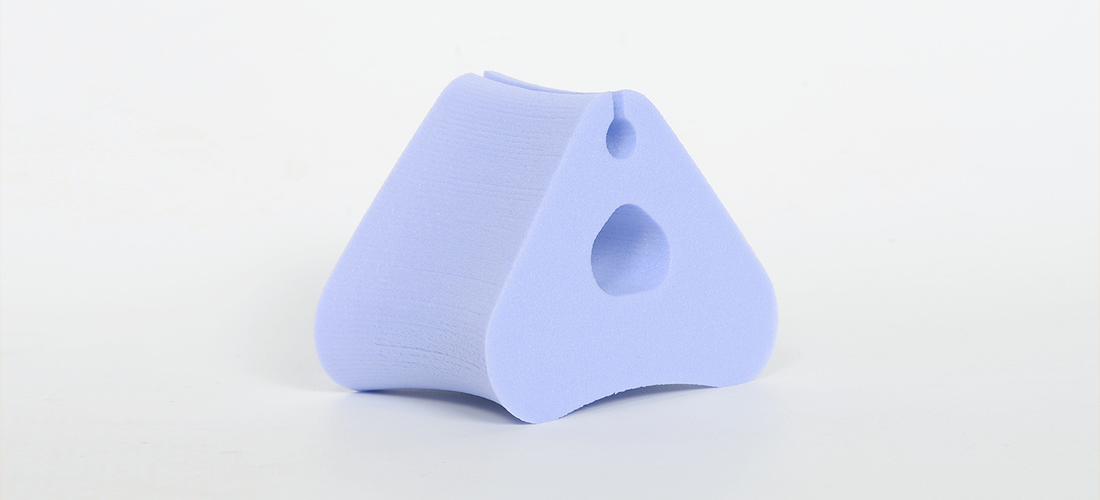
The extremely lightweight with high compression strength Elevate device is an essential solution for airway management and safety. Its unique shape and curvilinear design allows for increased contact surface area as well as multiple orientation use. The Elevate device provides the support needed against the constant downward pull on the endotracheal tube or tracheostomy tube due to the ventilator circuit weight while helping to maintain a secure airway.
Material innovation
Hernia Mesh Printing
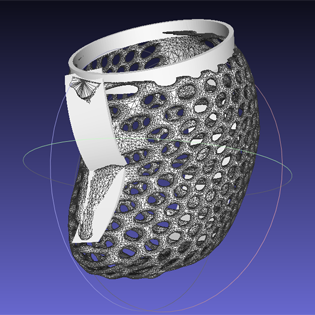
Hex Mesh presents a novel geometry and innovation to print a variety of mesh based products including Hernia Mesh products.
Additive manufacturing
Nylon Cube
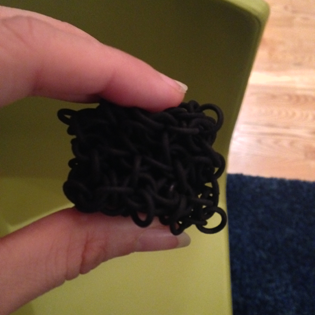
Because it is printed as one piece, there are no breaks in the links, and no weak spots. Consequently, the links can be smaller and still as strong, and the possibilities for new geometries is remarkable.
Prosthetics
Custom Upper-Limb Fitting
Research equipment
Rat MRI Components
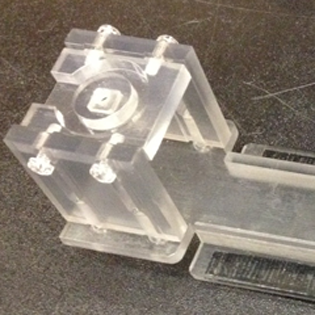
Research hospitals test new drugs and procedures on rats. In order to view results and side effects, the rats have to go through repeated MRI scans. This requires the use of specialized equipment to hold the rat in position. Each aspect of the device has to be machined to extreme resolutions to ensure exact measurements. VisMed-3D was able to produce these highly accurate brackets and parts in a material that is MRI compatible, without distorting the MRI image, at a significantly reduced cost.
From the digital care network to the operating room
Personalized Care
Patient-specific replicas and guides turn CT and MRI data into tactile insight for planning, communication, and education.
Connected Care Delivery
Interoperable foundations connect patient engagement, care delivery, collaboration, clinical analytics, and personalized medicine.
Research & Innovation
Custom MRI-safe components, biosensor concepts, simulations, and test fixtures help researchers move faster.
Product Development
Concept assessment, stakeholder feedback, material guidance, prototyping, and testing reduce risk before manufacturing.
Reduce risk. Improve safety. Move faster.
From concept viability and HL7 FHIR interoperability to patient-specific models, surgical tools, and devices manufactured at scale, we build healthcare technology that holds up in the field.

 Surgical planning