
 Prosthetics
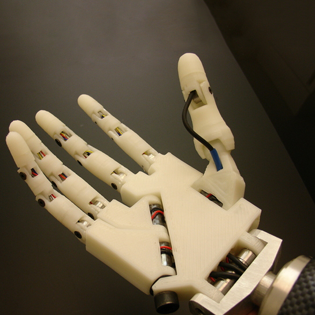
3D Printed Hand
A functional prosthetic hand model demonstrating articulated 3D-printed mechanical design.
VisMed-3D practices Physical AI — intelligence that works not just on a screen, but in the devices, models, and real-world environments where decisions actually happen. We turn ambitious ideas into precise, physical reality, with deep roots in healthcare and a reach that runs from surgical anatomy to product prototypes.
Six practices, one discipline — Physical AI. Each turns a different kind of complexity into something clinicians, teams, and organizations can act on. Physical AI Strategy sits above the other five: it’s where we help you decide where to start.
ProstheticsA functional prosthetic hand model demonstrating articulated 3D-printed mechanical design.
 Surgical Planning
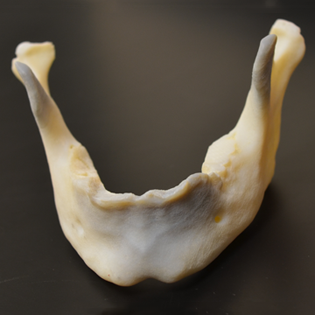
A patient-specific lower jaw model, accurately sized and contoured to support titanium reinforcement planning ahead of surgery.
 Surgical Planning
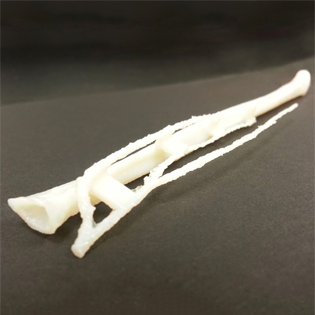
A true rendering of the fibula, accurately sized and contoured to support surgical bone-graft planning.
More than twenty years serving business and institutional clients.
Owned and led entirely by women, top to bottom.
Certified Women’s Business Enterprise — State of Illinois & City of Chicago.
There are lots of challenges with 3D printing. If it was as easy as getting the right machine, anyone could do it — but it’s not that simple. The VisMed-3D team helped me develop my prototype so it printed optimally and I learned exactly what I needed to know. The result was a shorter development cycle and a great-looking proof of concept I could take to my investors.
Testimonial 1 of 5
Artificial intelligence has spent the last decade helping clinicians interpret information. The next decade is different — intelligence is beginning to guide instruments, adapt imaging, and respond to anatomy, movement, and clinical context.
Physical AI begins when software can perceive, reason about, and act within the real world — not just observe it.
Meaningful healthcare innovation happens where technology, clinical practice, and human experience intersect.
Devices, imaging, and environments that respond to anatomy and context — not fixed protocols.
Tell us where you’re trying to go. We’ll help you figure out where Physical AI fits — and where it doesn’t.